
You know that feeling. You're in a hotel room wrestling with a login page that…
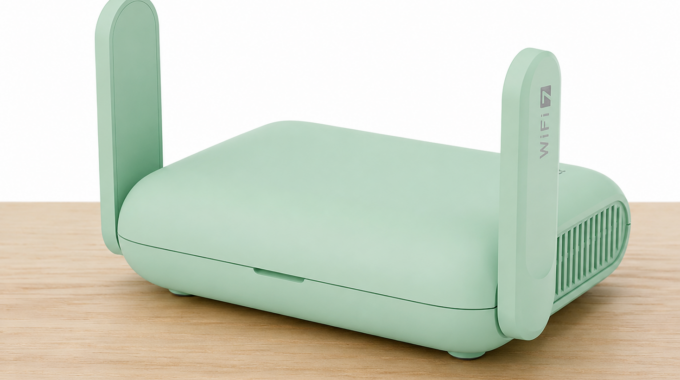
GL.iNet Beryl 7 (GL-MT3600BE) Review: Wi-Fi 7 Speed in a Travel-Sized Package
Wi-Fi 7 has been trickling down from flagship home routers into smaller form factors, and the Beryl 7 is GL.iNet’s answer for travellers who want that jump without carrying a full-size router. It’s the direct successor to the popular Beryl AX, and on paper it’s a serious step up — triple the CPU power, double the flash storage, and VPN speeds that used to be reserved for home routers, all in a device that fits in a jacket pocket.
🧠 Specs and Hardware Overview
| Specification | Details |
|---|---|
| Model | GL-MT3600BE (Beryl 7) |
| CPU | MediaTek, Quad-core @ 2.0GHz |
| RAM / Storage | 512MB DDR4 / 512MB NAND Flash |
| Wi-Fi Standard | 802.11a/b/g/n/ac/ax/be (Wi-Fi 7) |
| Wi-Fi Speed | 2.4GHz: up to 688Mbps / 5GHz: up to 2882Mbps |
| Ethernet Ports | 2× 2.5GbE (1 configurable WAN/LAN) |
| USB Port | 1× USB 3.0 |
| Power Input | USB-C PD (5V/3A, 9V/3A, 12V/2.5A) |
| Power Consumption | <12W |
| Dimensions / Weight | 120 × 83 × 34mm / 205g |
| Price | $208.99 AUD |
The quad-core 2.0GHz chip is the headline upgrade here — triple the processing power of the Beryl AX — and it’s what makes the VPN numbers below possible without the router choking under encryption overhead.
📶 Wi-Fi 7 — With a Catch Worth Knowing
The Beryl 7 is a dual-band Wi-Fi 7 router — 2.4GHz and 5GHz only. It does not have a 6GHz radio, which means it misses out on the full Wi-Fi 7 feature set that tri-band devices (like GL.iNet’s own Slate 7 Pro) support, including the least congested spectrum Wi-Fi 7 was partly designed to take advantage of.
That’s not a dealbreaker for a travel router — most hotel, café, and public networks you’re connecting to aren’t giving you 6GHz anyway — but if you were expecting the “full” Wi-Fi 7 experience, it’s worth knowing going in. What you do get from Wi-Fi 7 on the bands available is Multi-Link Operation (MLO), which lets supported devices use multiple bands simultaneously for better stability and lower latency, along with 4K QAM for higher data density on each channel. On the wireless side alone, that’s still a meaningful jump over the Beryl AX’s Wi-Fi 6.
🔐 VPN Performance — The Real Headline
This is where the Beryl 7 actually earns its price tag. I tested it running as a WireGuard server back to my home network, and separately ran OpenVPN-DCO through a PIA subscription.
- WireGuard® (via Ethernet): rated up to 1,100Mbps
- OpenVPN-DCO (via Ethernet): rated up to 1,000Mbps
In my own testing I didn’t personally see numbers that high — that’s not to say they’re not achievable under the right conditions (client mode, wired backhaul, a VPN endpoint capable of matching that throughput), but it’s worth setting expectations that GL.iNet’s published figures are best-case, client-mode results. Even short of the rated ceiling, the jump over the Beryl AX’s ~300Mbps VPN throughput is substantial, and it’s genuinely enough to make a VPN-tunnelled connection feel like a non-issue rather than a bottleneck.
⚙️ Dual 2.5G Ports and Wired Performance
The two full 2.5GbE Ethernet ports (one of which is switchable between WAN and LAN) are a meaningful upgrade over the Beryl AX’s gigabit-only ports. For a travel router, that matters more than it sounds — plug in a hotel’s wired connection or a NAS and you’re not bottlenecked by the Ethernet port before you even get to Wi-Fi or VPN limits. Paired with the CPU headroom, this is a device that can actually push its rated VPN speeds over a wired connection rather than being capped by the port itself.
🔌 Power and Portability
The move to USB-C PD charging (5V/3A, 9V/3A, 12V/2.5A) is a small but genuinely useful change — it means the Beryl 7 can run off the same charger you’re already carrying for your phone or laptop, rather than needing its own dedicated power brick. For a device built around minimising travel clutter, that’s exactly the right call.
🟢 Pros
✅ Genuinely fast VPN throughput — a real step up from the Beryl AX
✅ Dual 2.5G Ethernet ports, one switchable WAN/LAN
✅ Multi-Link Operation and 4K QAM from Wi-Fi 7 on available bands
✅ USB-C PD charging — one less charger to pack
✅ 512MB flash gives real room for custom scripts and packages
✅ Compact, travel-friendly form factor
🔴 Cons
❌ Dual-band only — no 6GHz radio, so you don’t get the full Wi-Fi 7 spectrum advantage
❌ No screen — status and setup are entirely app/web-based
❌ Real-world VPN speeds will vary from the rated figures depending on your setup
🧑💻 Who Is This For?
The Beryl 7 is built for the traveller who doesn’t need a screen on the device itself but does need serious, reliable VPN throughput — remote workers tunnelling back to a home or office network, homelabbers wanting encrypted access to their gear on the road, or anyone tired of watching a VPN connection cap their hotel wifi speed. If you want a display for on-device diagnostics, look at the Slate 7 range instead. If you just want the fastest VPN speeds GL.iNet currently offers in a travel form factor, this is it.
⭐ Verdict: 4.5/5
The Beryl 7 delivers exactly what it promises: genuinely fast VPN throughput in a pocketable, PD-chargeable travel router. The lack of a 6GHz band is worth knowing about, but for the VPN-first use case this router is built for, it barely registers. A great travel router for anyone who values secure, high-speed access over on-device bells and whistles.
🙌 Support This Review
If this review helped and you’re picking up a GL.iNet router, using the links below costs you nothing extra and helps support this site:
💬 Have questions or want help setting yours up?
Follow me on Facebook: facebook.com/KFInternetFixer

Related Posts
Comments (0)